Listening is an art form.
In today's world, we as humans listen halfheartedly, as while we are listening, we are forming our response. So are we really listening? How frustrating!
According to Simon Senek, "Companies that really listen to their customers do so before they make decisions not after they need to pick up the pieces. Companies that listen do things that are actually intended for the customer.
In contrast, companies that don’t listen only say they are listening when things don't go according to plan."
Let's look at Bank of America as a great example... Simon goes on to say, "I would have more respect for Bank of America if they were simply honest. “We were looking for ways to increase our profit and thought a transaction fee to debit card transactions was a good strategy.
The negative reaction was much worse than we anticipated so we’ve decided to reverse course and look for other ways to maintain growth and profit.” A statement like that would at least be consistent with whom Bank of America really sees as their primary concern: their shareholders.
And at least we can respect that the bank was telling us what we already knew or expected (it's called integrity)."
Web Conferencing is where a presenter can deliver a presentation over the web to a group of geographically dispersed participants.
The terms ‘web conference’ and ‘webinar’ are used interchangeably, but often do not refer to the same type of service.
In its simplest form, a presentation can be interactive or not (the main difference between a Web Conference and a Webinar), and as such, participants in a 'webinar' can see what’s on the screen but cannot make changes.
More advanced systems allow the presenter to share applications or their
entire computer desktop with participants and even take control of the
remote computer over the internet.
Depending on factors like system compatibility and functionality, 'web conferencing' systems vary enormously in terms of cost.
At one extreme, systems can cost thousands of dollars per year, require software packages to be installed on each participants computer and rely upon having specific firewall configurations and high bandwidth internet connections. On the other extreme there are many completely free services available, but these tend to only support a very limited number of participants and lack a comprehensive set of features; critically, as they are free, they are rarely supported and therefore not suitable for business use.
A 'webinar' can be, and often is, done on a web conferencing platform. However, professional 'web broadcasts' (also often called "webinars") can run in the thousands after all production costs are added in. That said, 'web broadcasts' (also known as "web casting") are extremely professional and can be compared to a TV broadcast, but on the web.
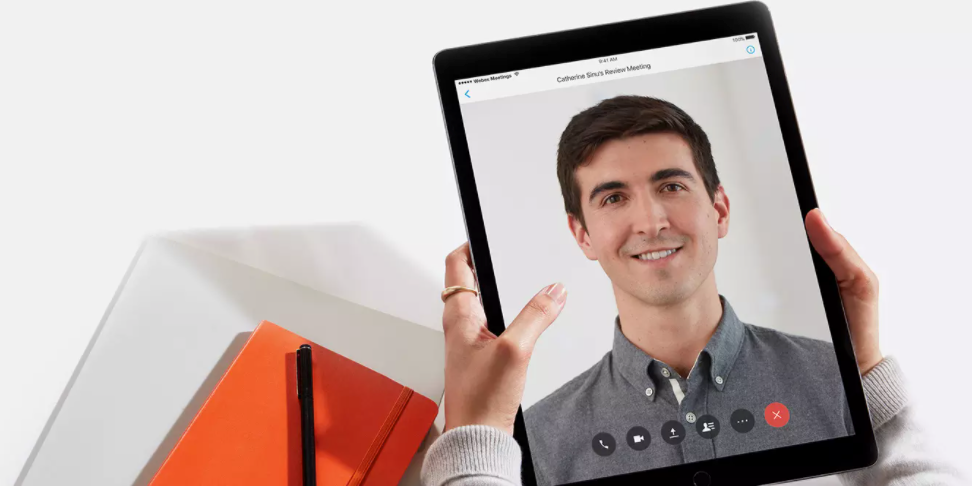
A video conference is where quality high quality/professional video cameras are used to enable participants in a virtual conference to see the presenter - and sometimes the other participants.
Businesses and individuals use video conferencing in many different ways: Both one-to-one, and in one-to-many scenarios.
Historically, the main use for video conferencing has been within the corporate environment for business meetings. Due to the requirements for dedicated camera, audio and networking equipment, it was typical to set up dedicated rooms for the purpose of holding video conferences.
Before the availability of high bandwidth internet connections, signals were carried over point to point connections established via ISDN lines. ISDN are similar to telephone connections in that the calling party would ‘dial up’ the destination station and pay for the length of time the call was open. Due to the high bandwidth requirement multiple connections were usually required making it very expensive to hold international video conferences.
The internet has now simplified some of the connectivity issues however the equipment and bandwidth required to hold near broadcast quality video conferences can still place the barrier of entry-level systems too high for the typical small or medium sized business user.
Over the last few years, services aimed at small business and consumers have become popular and with webcams, as opposed to more sophisticated and expensive cameras, the picture quality and size are somewhat limited, but adequate for simple meetings.
Additionally, with the introduction of business-class bandwidth, the audio component is carried over the Video Conferencing CO-DEC (a coding and de-coding unit required in video conferencing).